Overview
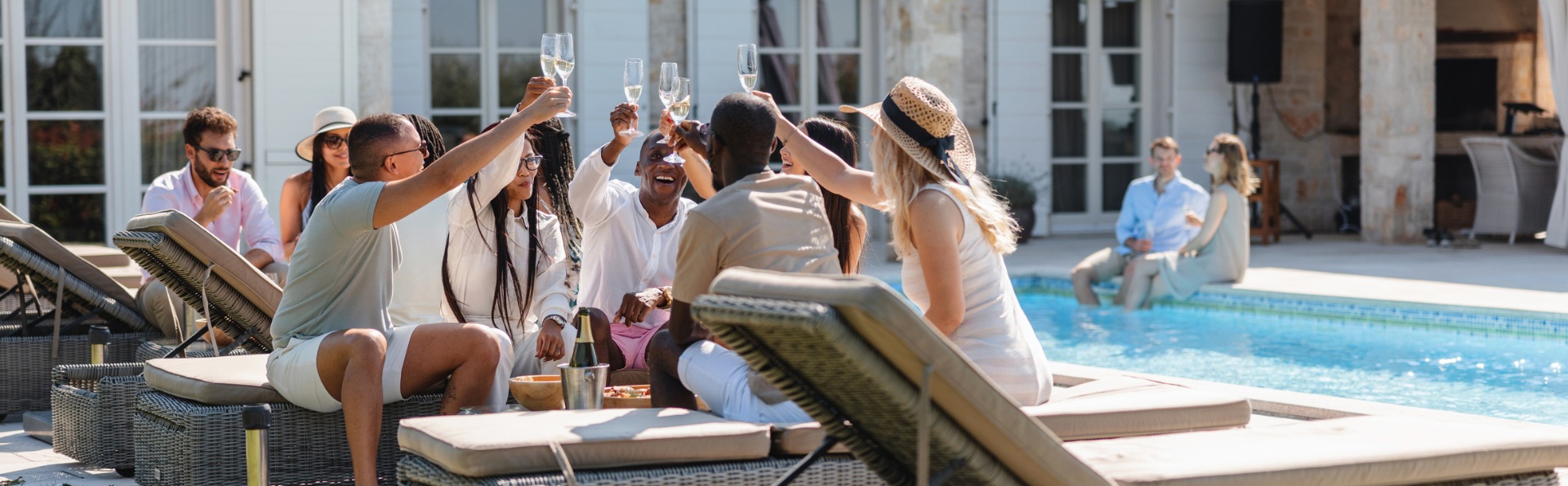
Small, pristine and deliberately uncrowded, St. Barthelemy (better known as St. Barth's--pronounced "St. Barts") is as European as it gets in the Caribbean. Known as the "Cannes" of the islands for its chic, trendy attitude, deluxe accommodations and the scores of celebrities who frequent her, St. Barth's is a place for people with as much leisure money as time.
A tiny island of only eight square miles, St. Barth's terrain consists of dramatic hills and valleys encircled by stark white sand. With little to brag about beyond her spectacular natural beauty, St. Barth's centered her focus around her harbor and the island's only town, Gustavia, emerged at her edge. Although discovered by Christopher Columbus (who named the island after his brother Bartholomew), the island today strives to remain undiscovered by the masses. If you're a day tripper or cruise shipper, don't look for the welcome mat to be rolled out for you. St. Barth's is determined to maintain its largely affluent, upper crust clientele however that's not to dissuade you from investigating her lovely charms. And there are many.
The island's amenities include terrific diving, snorkeling and sun bathing on beaches that are the Caribbean's finest (and cleanest). The French flair is apparent in the rich, authentic cuisine that you'll enjoy at any number of posh restaurants overlooking fishing villages with harbors full of yachts and sailboats. A favorite pastime is undoubtedly shopping - but not for the thrift shoppers. Don't look for bargains here - look for the best in fashion designs from Milan to New York.
Since the word leaked in the late 1980's of St. Barth's charms, the island has become more accessible than ever to tourists. An island that decidedly will never become a tourism Mecca, St. Barth's offers both tranquility and luxury to all who pursue her.
HISTORY
When Christopher Columbus sailed past this island in 1493, he named the place for his brother, Bartholomew. When the French took over, the island eventually became ritzy, glitzy St Bartholemy. The Columbian name finally evolved into St Barth in French and Saint Barts in English.
The island never went into the plantation business, so there were never any slaves other than a few domestic ones. Plantation-free, extremely hilly St Barts has valleys and beaches that are among the most unspoiled and gorgeous in the Caribbean. From the island's highest peak, about 930 ft, it is possible to see Sint Eustatius and St Kitts islands.
On July 1, 1784, the King of France, along with King Gustav III of Sweden, traded St Barts for a Swedish warehouse and Baltic Sea trading rights. Thus, St Barts became Sweden's only Caribbean colony. Today, little remains of Swedish rule - other than a waterfront warehouse, several Swedish street names, and the Swedish royal name "Gustavia" for the island's commercial center.
Sweden's monarch made his Caribbean colony a duty-free port. Almost ever since, St Barts and its waterfront capital, Gustavia, have prospered as a shopper's haven. However, trade dropped off in 1847 when Sweden's king freed the slaves, what few there were. Since there were no plantations, most of the freed slaves left to find work in the US Virgin Islands.
In 1878, King Oscar II of Sweden ordered a referendum on sovereignty. Islanders voted to return as part of France, but only if the duty-free status could remain in place.
History
When Christopher Columbus sailed past this island in 1493, he named the place for his brother, Bartholomew. When the French took over, the island eventually became ritzy, glitzy St Bartholemy. The Columbian name finally evolved into St Barth in French and Saint Barts in English.
The island never went into the plantation business, so there were never any slaves other than a few domestic ones. Plantation-free, extremely hilly St Barts has valleys and beaches that are among the most unspoiled and gorgeous in the Caribbean. From the island's highest peak, about 930 ft, it is possible to see Sint Eustatius and St Kitts islands.
On July 1, 1784, the King of France, along with King Gustav III of Sweden, traded St Barts for a Swedish warehouse and Baltic Sea trading rights. Thus, St Barts became Sweden's only Caribbean colony. Today, little remains of Swedish rule - other than a waterfront warehouse, several Swedish street names, and the Swedish royal name "Gustavia" for the island's commercial center.
Sweden's monarch made his Caribbean colony a duty-free port. Almost ever since, St Barts and its waterfront capital, Gustavia, have prospered as a shopper's haven. However, trade dropped off in 1847 when Sweden's king freed the slaves, what few there were. Since there were no plantations, most of the freed slaves left to find work in the US Virgin Islands.
In 1878, King Oscar II of Sweden ordered a referendum on sovereignty. Islanders voted to return as part of France, but only if the duty-free status could remain in place.
close